Africa: Tanzania targets media alliance to reposition itself in the narrative of investment in Africa


DAR ES SALAAM – Tanzania is quietly expanding its investment diplomacy beyond boardrooms and bilateral meetings into the arena of strategic global media influence.
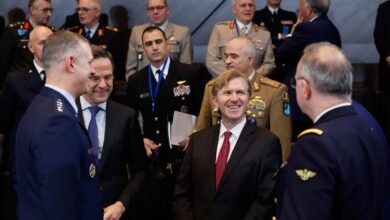
Discussions held on Monday, February 9, 2026, at the Office of the Registrar of the Treasury (OTR) in Dar es Salaam between Registrar of the Treasury Nehemiah Mesheshu and Frederic van de Viver, head of the English-language Jeune Afrique Media Group in Africa, indicate a deliberate effort by Tanzania to shape how its economic story is told across the continent and to global investors.
The talks focused on exploring ways of cooperation and highlighting investment opportunities available in Tanzania, but their importance extends beyond routine institutional engagement.
It reflects Tanzania’s growing awareness that attracting investment today depends not only on policy frameworks, but also on the power of narrative and visibility within credible international information platforms.
Follow us on WhatsApp | LinkedIn To get the latest headlines
In recent years, Tanzania has focused on enhancing macroeconomic stability, improving regulatory frameworks and reorienting public institutions such as OTR towards resource mobilization and monitoring stronger performance of public investments.
However, attracting long-term capital increasingly requires greater credibility within global ecosystems, as investors, policymakers and corporate leaders interpret signals of reform and market potential. This is where Jeune Afrique Media Group becomes strategically important.
Headquartered in Paris and founded in 1960, the group is located at the intersection of African political intelligence, economic analysis and investor-focused journalism.
Through its English-language publication The Africa Report and its investment-focused platform Africa Business+, along with comprehensive coverage of political and economic developments, the group provides in-depth, independent, high-quality analysis relied upon by investors, policymakers and business leaders in both Anglophone and Francophone Africa.
Its strong network of experts and broad continental reach have made it a reference point for understanding Africa’s complex and rapidly evolving business environment, including specialist coverage of sectors such as extractive industries, infrastructure, energy and financial markets.
By engaging the group, Tanzania is positioning itself within a serious economic policy discourse, reaching institutional and strategic investors in companies rather than just the general public, while also bridging the traditional gap between French-speaking and anglophone investment information flows.
Read also: NHIF reaches over 6.7 million Tanzanians
This reflects a recognition that modern competition for capital increasingly occurs in analytical spaces where credibility, depth of insight and trusted platforms are more important than promotional messages.
In this strategic context, where the narrative, the credibility of reform, and investor perceptions intersect, the tone of the Dar es Salaam discussions was set.
During the meeting, Mr. Micho assured Mr. Van de Viver that Tanzania provides a favorable investment environment and that there will be strong institutional support available.
He stressed that collaboration within the public sector would have the full support of OTR, while engagement with the private sector could be facilitated through the Tanzania CEO Roundtable. Mr. Van de Viver, in turn, expressed his commitment to enhancing cooperation, noting that the two sides must find the best ways to work together, and agreed that Tanzania provides a business-friendly environment.
His statements, which echo those of the Treasury Registrar, indicate more than mere diplomatic courtesy; They signaled a shared recognition that how Tanzania’s economic story is framed internationally has become part of its investment strategy.
Rather than relying solely on traditional investment promotion campaigns, engagement with analytical platforms allows sector-specific narratives ranging from mining reforms and energy transition to logistics corridors and financial deepening to be disseminated in formats that global investors trust. Jeune Afrique Media Group’s role extends beyond publishing.
The organization is also an influential networker through platforms such as the Africa CEO Forum, which brings together thousands of CEOs, investors and government leaders, and the Africa Finance Industry Summit, which focuses on the financial sector.
Participation in these ecosystems creates channels for partnerships, funding discussions and strategic communication that extend beyond readers into the heart of continental business and political decision-making. Across Africa, governments are increasingly realizing that platforms like the Africa Report influence how they assess risks, compare markets, and judge reform paths.
Read also: Zabar pledges to establish long-term relations with Japan
By opening the door to cooperation, Tanzania is aligning with a broader continental trend where economic diplomacy now includes structured engagement with respected analytical media.
DIFCOM, the communications and media planning arm of the Group, together with its digital platforms, applications and professional networks, provides multiple paths for editorial collaboration, corporate communications, advertising partnerships and corporate visibility at major business events.
Mr. Van de Viver’s commitment to finding the best ways to work together also reflects the strategic direction of Jeune Afrique Media Group.
The Group is investing heavily in digital transformation and expanding its presence in English-speaking markets such as Nigeria, Kenya and Ghana, making English-speaking Africa a key driver of its growth while complementing its strong base in French-speaking North and West Africa. Tanzania, as one of the most stable and reform-oriented economies in East Africa, is naturally suited to this expansion.
Experiences elsewhere on the continent illustrate how such engagement can amplify national strategies. Egypt, for example, has actively worked to strengthen its economic, political, and strategic partnerships across Africa, through deliberate incursion into English-speaking markets alongside its traditional influence in North Africa.
Collaboration with analytical media platforms, including Jeune Afrique Media Group, has enabled Cairo to articulate its strategic role in regions such as the Horn of Africa and the Red Sea corridor, while amplifying narratives around investment, infrastructure and energy.
By appearing on respected platforms, Egypt’s reform path and continental ambitions have gained greater visibility, contributing to its recognition in recent assessments that ranked it among the best-performing economies in Africa.
Likewise, Morocco has expanded its economic and diplomatic engagement across Anglophone Africa as part of its South-South cooperation strategy, positioning itself as a gateway to the continent. Leveraging partnerships with pan-African analytical media, Rabat put forward an economic vision centered around industrialization, financial expansion and the African Continental Free Trade Area.

Sign up for AllAfrica’s free newsletters
Get the latest African news delivered straight to your inbox
This vision has reinforced Morocco’s broader strategy of integrating its development model into continental investment and policy talks. These experiences underscore a growing consensus across Africa: credible media partnerships act as force multipliers in economic diplomacy.
They help translate domestic reforms into discourses that resonate with investors, policymakers and business leaders globally, narrowing the gap between political action and international perception.
Against this backdrop, Tanzania’s outreach to Jeune Afrique Media Group indicates a strategic awareness that being featured in authoritative analytical media is in itself an economic asset. Unlike promotional outlets, Jeune Afrique’s reputation is built on independent analysis and political and economic scrutiny developed over decades. Positive exposure within such a platform carries more weight than traditional advertising and contributes to building credibility in the long term.
As African economies compete for investment in a global environment shaped by capital constraints and geopolitical shifts, the competition is increasingly about who can convincingly shape the narrative of reform, stability and opportunity.
Tanzania’s engagement with Jeune Afrique Media Group reflects a clear step in this direction. The February 9 meeting may not have resulted in a signed agreement, but it represents a meaningful step towards positioning Tanzania not just as an investment destination, but as a serious participant in Africa’s strategic economic, political and trade talks. · Preparing the treasury registrar’s office.